
Sanctuary Cities for the Unborn ordinances didn’t just appear out of nowhere. They weren’t dreamed up by local voters or even by local leaders responding to community concern. SCFTU are the product of a strategic, well-funded, religiously driven campaign led by Mark Lee Dickson who travels town to town selling fear, legal tricks, and religious posturing.
The men behind this ordinance aren’t neutral legal experts. They are attorneys and lobbyists with a singular idealogical mission: to use the law as a weapon to punish anyone who supports abortion access, and they don’t mind trampling on your rights along the way. Let’s dish:
Who Wrote SCFTU and Why?

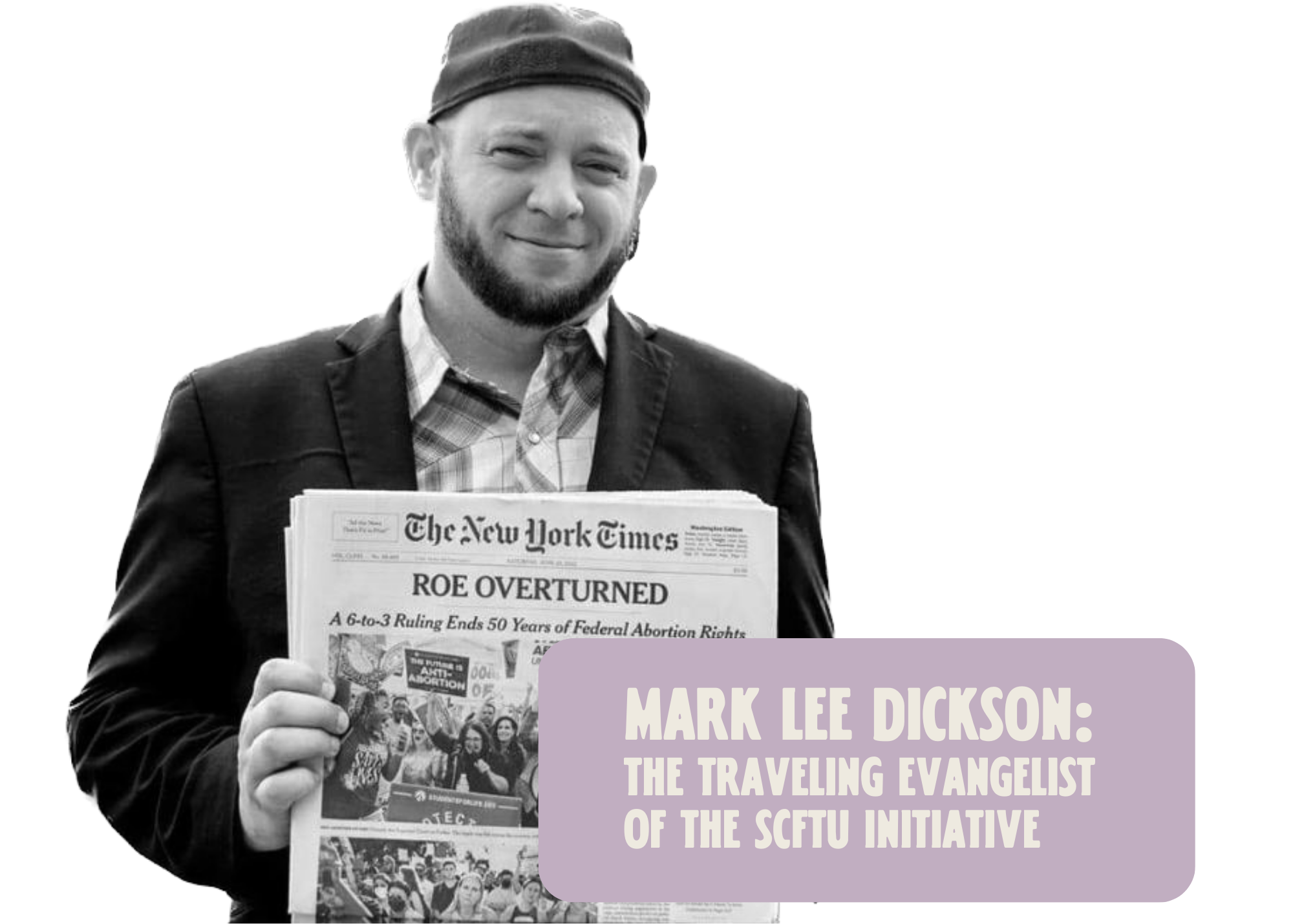
Meet Mark Lee Dickson, the public face and chief promoter of the SCFTU initiative. A self-proclaimed “pastor” and longtime anti-abortion activist was originally associated with Right to Life East Texas. Dickson brought the SCFTU initiative to the forefront in 2019, when he convinced the all-male city council of Waskom, Texas (Population: 1,860), to adopt the first Sanctuary City for the Unborn ordinance, even though the town had no abortion provider to begin with (See Figure 2). From there Dickson has taken his ordinance on the road, finding success in small cities and rural towns across Texas and the nation.


How Fear Becomes the Enforcement Tool
These ordinances rarely see courtrooms because fear does most of the work. The harm begins quietly, in everyday moments that never make the news: a parent hesitating before helping their child travel for medical care; a friend deleting a text offering a ride to an appointment; a volunteer stepping back from a mutual aid group because they can’t risk even the possibility of being sued; a nonprofit pulling resources and information “just to be safe”; a city official choosing silence over scrutiny.
These ordinances are written vaguely on purpose: so people are left guessing where the line is. And when the cost of being wrong, or even ignorant, could mean public exposure, financial ruin, or years of legal stress, many decide it’s safer to do nothing at all. Even when enforcement is unlikely, uncertainty alone is enough to silence speech, fracture organizing, and push care underground. Over time, neighbors start policing each other, conversations shrink, and fear replaces solidarity. Not because people have stopped caring, but because SCFTU makes compassion feel dangerous.
WTF is “Aiding and Abetting”?
One of the most dangerous and revealing features of SCFTU ordinances is their use of the phrase “aiding and abetting.” Because these ordinances cannot actually prevent abortions from happening, they shift their focus to punishing the people around them instead. Rather than openly punishing pregnant folks, SCFTU expands its reach to target advocates, support networks, friends, family members, and anyone who helps someone navigate their options. While anti-abortionists claim this language only applies to so-called “abortion traffickers,” the ordinances are written broadly enough that nearly any act of assistance, information-sharing, or logistical support can be framed as illegal.
This ambiguity is not accidental. When people cannot clearly tell what behavior might expose them to a lawsuit, many choose silence and inaction. And that chilling effect is how these laws are designed to do their damage.
Organizers, Advocates, and Volunteers
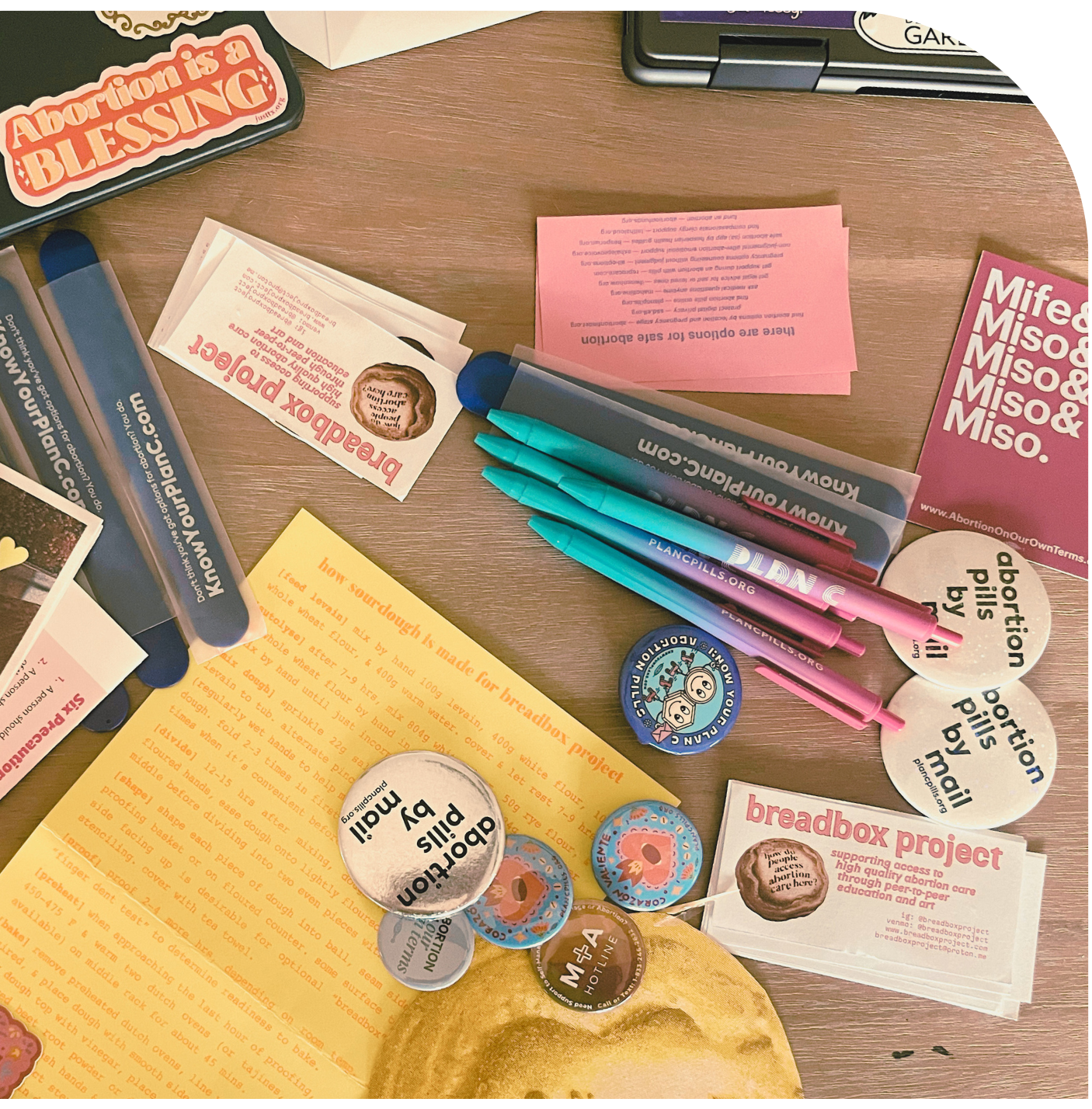
For organizers and volunteers, “aiding and abetting” can be interpreted to include the basic work of community education and mutual support. Hosting informational meetings, sharing clinic or hotline information, answering questions online, tabling at events, connecting people to resources, or even helping coordinate logistics are all legally risky under SCFTU. The ordinance sometimes specifically prohibits this type of resource-sharing, which is meant to leave people with no guidance and no options. This is a gross violation of the First Amendment.

Family Members + Loved Ones
SCFTU ordinances deliberately blur the line between activism and care, placing family members at risk for simply supporting someone they love. Helping pay for travel, taking time off work to accompany someone, offering childcare, or even emotional support can be framed as “aiding and abetting.” In moments of crisis families are forced to weigh compassion against fear of legal retaliation. This can lead to mistrust in relationships, or worse, scare someone from acting in a timely manner during the midst of a medical emergency like a miscarriage.

Friends + Neighbors
For friends and neighbors, the risk shows up in everyday acts of kindness. Offering a ride, or a place to stay, help navigating appointments, or even basic support like meals or childcare could also be considered “aiding and abetting.” In smaller towns where privacy is limited and people know one another, SCFTU can make even quiet, personal acts of help feel exposed. This pushes people to withdraw from helping altogether, or forces them to potentially make a costly legal risk.

Healthcare Workers + Medical Professionals
Healthcare workers in Texas are already working under FOUR overlapping abortion bans, each with its own penalties, exceptions, and legal gray areas. SCFTU piles on yet another layer of confusion and uncertainty on top of an already dangerous situation. Doctors are forced to second-guess what they can legally say and recommend, even in emergency situations. In moments where minutes matter, providers may hesitate to consult lawyers instead of acting, because if they help too soon it could expose them to criminal penalties too, not just civil ones. We’ve seen how this plays out in Texas, where patients like Amanda Zurawski and Lauren Miller were denied timely, life-saving medical care because doctors’ hands were tied by these abortion laws. SCFTU worsens this crisis by reinforcing a system where legal risk outweighs medical judgment, leaving providers trapped between their duty to care for patients and a web of laws designed to punish them for doing so.
By using the phrase “aiding and abetting,” SCFTU ordinances intentionally collapse care, stifle free speech, and frame community support into something that can be framed as criminal. These laws do not just target imaginary “abortion traffickers,” they are designed to make ordinary people afraid to help, speak, or show up for one another, leaving those in crisis isolated when they need support the most.